Learn how camber and camber gain can be used to improve the handling of your RC car. It's one of the most fundamental adjustments for both on-road and off-road cars.
Quick reference
Typical camber
Class
Front
Rear
1/10 on-road / touring
-1.5° to -3°
-1° to -2°
1/10 off-road buggy (2WD/4WD)
-1° to -2°
-2° to -3°
1/8 buggy
-1° to -2°
-2° to -3°
Short course / truck
-1° to -2°
-1.5° to -2.5°
Starting points — your exact value depends on car and grip. More negative = top of the tire leans in.
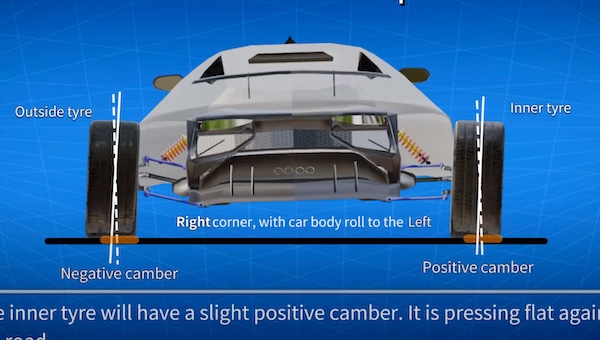
Camber, or “static camber” refers to the angle of the car’s wheels from vertical when viewed from the front or back of the car, and it is measured with the car at its natural ride height. If the wheels lean inward, they have negative camber, and outward lean is positive camber.
Most cars have negative camber to help increase/maintain the tire’s contact area as the suspension is compressed and/or the chassis rolls. Camber is generally never set to positive in the front.
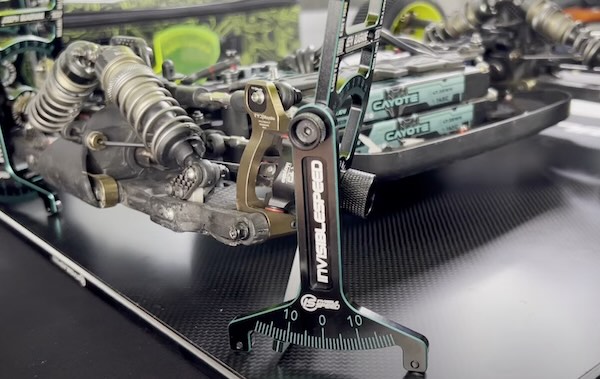
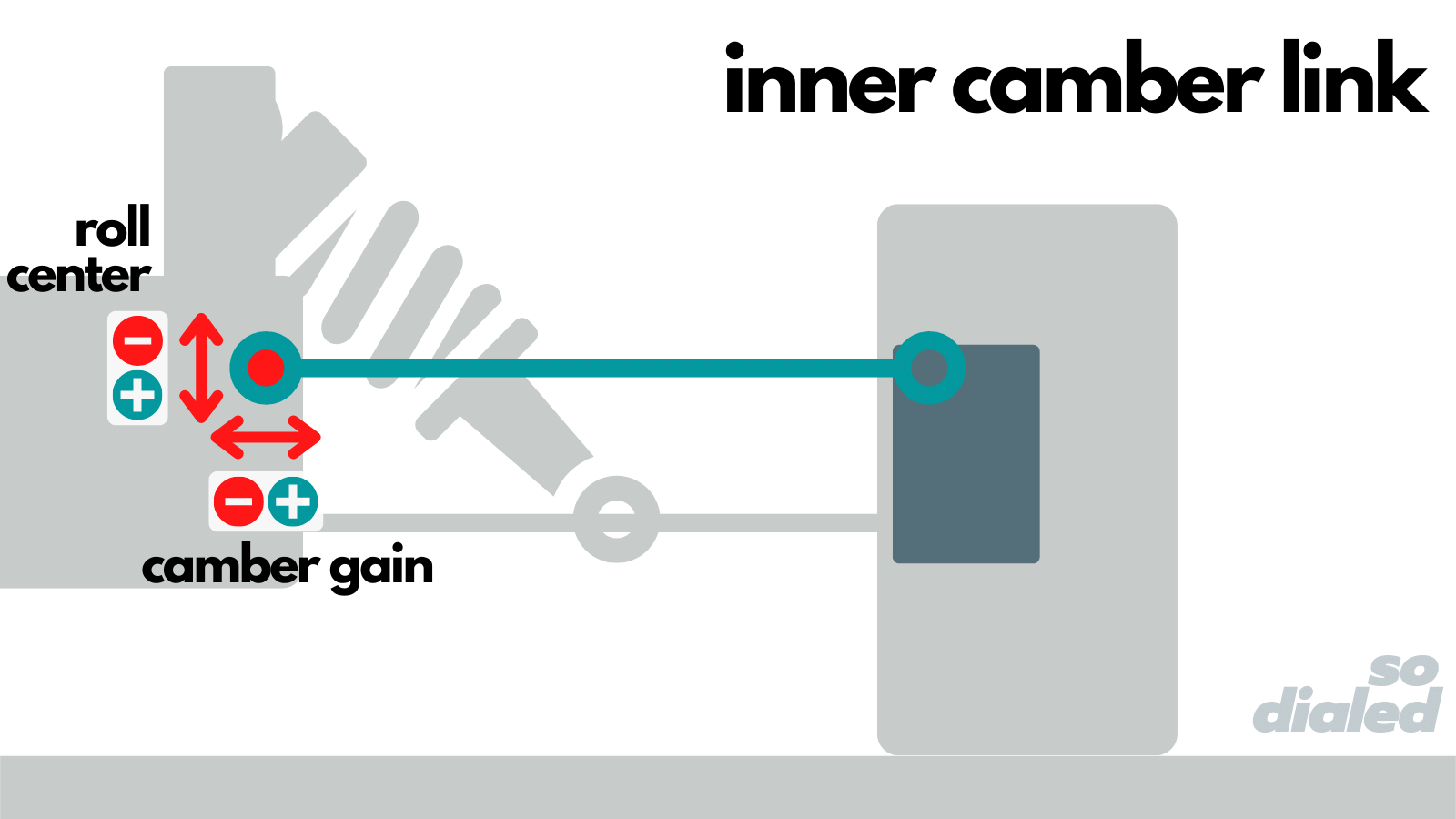
Camber is usually set by adjusting the length of the upper suspension link (often called camber link), as shown above. That camber link's inner and outer mounting points are also important for tuning your handling as they affect the car's roll center and camber gain (explained below).
Slight positive camber (leaning outward) can improve straight-line acceleration on loose tracks, but is otherwise not recommended
Higher inboard (bulkhead) ball studs
Lower roll center
Less camber gain (camber change during compression)
Lower inboard (bulkhead) ball studs
Higher roll center
More camber gain (camber change during compression)
Higher outboard (hub) ball studs
Less roll, higher roll center
Lower outboard (hub) ball studs
More roll, lower roll center
Shorter links
More roll
Faster on-power square-up
Generally suitable for low-grip tracks
Longer links
Less roll
Less on-power understeer on high-grip tracks
Generally suitable for high-grip tracks
Camber Gain
Camber gain is the amount the camber changes as the suspension is compressed. To increase camber gain, lower the camber link at the bulkhead or raise it at the hub, or shorten the camber link.
Less camber gain
Less initial steering
Less grip mid-corner to corner exit
Less steering responsiveness
More camber gain
More initial steering
More grip mid-corner to corner exit
More steering responsiveness
Common questions
How much camber should an RC car have?
Most run between -1° and -3°, with the rear usually a touch more negative than the front. Higher-grip tracks tolerate less; lower-grip tracks often want a bit more. The exact value depends on your class and conditions.
How do I measure RC camber?
With a camber gauge held against the wheel, with the car at race ride height on a flat surface.