
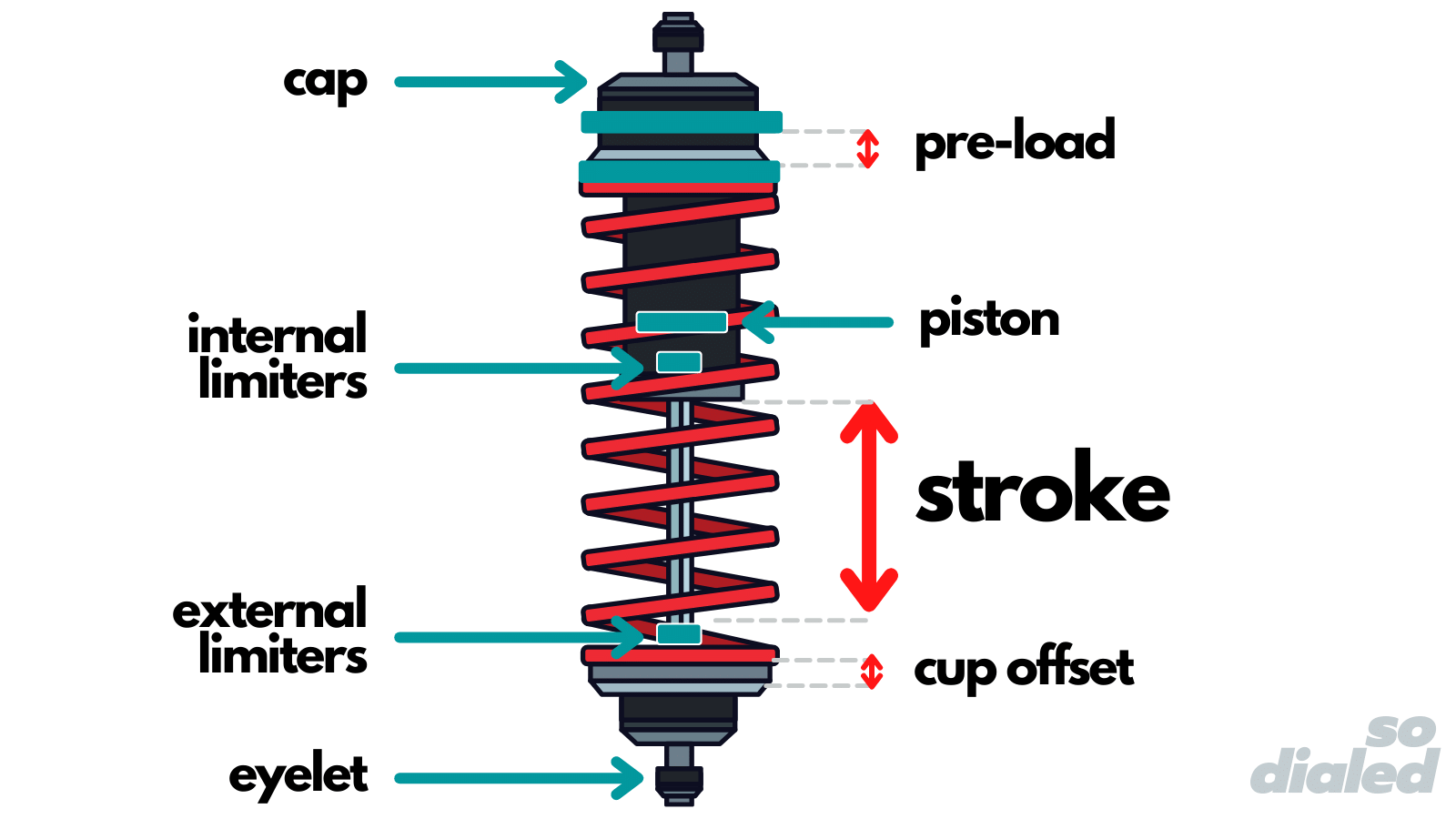
When a car drives over bumps (either small, like on the pavement, or large, like a jump), the wheels are pushed up while the shock springs push the wheels back down to the ground again, to keep the wheels in contact with the ground, so you can control your car.
However, if there were no damping the chassis would just bounce up and down constantly while the wheels stayed on the ground. We don't want this of course, as it makes the car hard to drive, so we use dampers, aka shock absorbers.
The dampers slow the reactions of the car when hitting bumps or when leaning in corners, so the weight of the car doesn't shift too suddenly and cause a loss of grip.
Types of dampers
Shock absorbers
The parts that do the actual damping are the shock oil and the shock pistons. The shock piston moves through the oil, allowing the oil to pass through holes drilled within the piston.
The damping action of the oil being forced through the piston works against both shocks from the surface that will push the wheels up and it works against the shock springs which will force the wheels back down again (pushing the chassis up.) By slowing the motion of the chassis in both directions, damping increases stability and makes the car easier to drive.
We can increase the damping of our shocks by using heavier oil or pistons with smaller of fewer holes, or vice versa.
Damper tubes
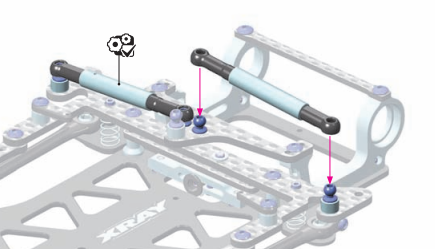
Some cars, usually pan cars (including F1), use damper tubes instead of (or in combination with) a standard piston-shaft shock absorber. A damper tube is a very simple device that consists of a piston that moves back and forth within a cylinder, but instead of having a piston to provide the damping, it relies on heavy grease within the cylinder. The heavy grease holds onto the shaft of the piston and resists its movement back and forth, providing the damping action.
These pan cars usually have springs on the side that make the car's chassis try to remain flat, so the dampers moderate that motion, keeping it from feeling bouncy or rolling too quickly.
Kingpin damping
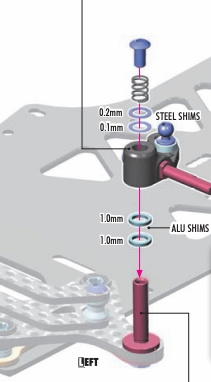
Most pan cars or some small scale cars also rely on grease-based damping for their front suspension. The front steering blocks (see image at right) move up and down on a "kingpin," and that kingpin is coated with grease which damps the steering block's movement up and down. To increase the damping, use heavier grease, and vice versa.
Tuning with Damping
Shock oil and pistons work together to control a car's damping, that is, its resistance to shock compression or extension. Those words may sound fancy, but think of it this way - the only thing keeping your car from sitting on the ground is four springs, and without damping your car would be bouncing all over the place on those springs. The shock oil and pistons slow down that bouncing effect, making it easier to drive the car.
More or less damping
For each section, we'll refer to more damping or less damping. What this means exactly depends on the type of damper and how you want to change the damping. The options are:
Less damping
- Piston has larger or more holes
- Oil is lighter (less viscous)
- Grease is lighter (for tube or kingpin dampers - grease is less viscous)
More damping
- Piston has smaller or fewer holes
- Oil is heavier (more viscous)
- Grease is heavier (for tube or kingpin dampers - grease is more viscous)
Front shocks
Less damping
- Faster steering response
- More low-speed steering
- More traction
- Better in bumps
More damping
- More stability
- Smoother high-speed steering
- Less traction
- Prevents bottoming out on large jumps
Rear shocks
Less damping
- More on-power traction
- Easier to drive
- Better in bumps
More damping
- Faster steering response
- Prevents bottoming out on large jumps
- Less traction
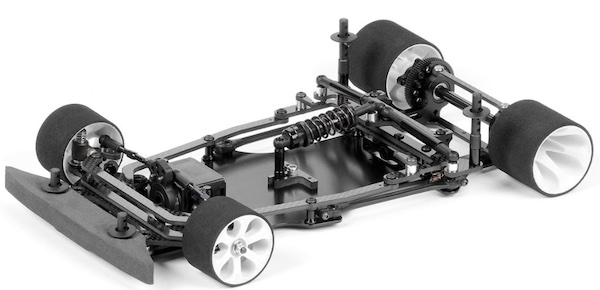
Center shock (pan car)
On-road pan cars usually have a center shock that controls the damping of the main chassis relative to the rear pod.
Less damping
- More rear grip
- Better for bumpy tracks
More damping
- More mid-corner steering
- Car feels stiffer
Side shocks (pan car)
Less damping
- More chassis roll
- More steering
- Less traction
- For high-grip tracks
More damping
- Chassis roll is slower
- Less steering
- More traction
- Best for low-grip tracks
Pack
Mostly relevant for off-road racing, small piston holes create pack when the shocks are compressed quickly, such as when the car takes off from or lands after a jump. Pack is an exponential increase in damping force, that is, a strong resistance to further compression. This pack effect helps prevent the car from bottoming out on jumps (taking off or landing), but it can also make the car "skitter" over bumps, that is, it may be unstable and hard to control.
Some pistons offer a mix of small and wide holes in order to get a blend of these behaviors - enough pack to prevent bottoming out, but enough fluid flow to give responsive handling in the rough spots.
Temperature Variance
When racing in colder conditions than usual, you may need to use a lighter oil, or a heavier oil for hotter conditions.